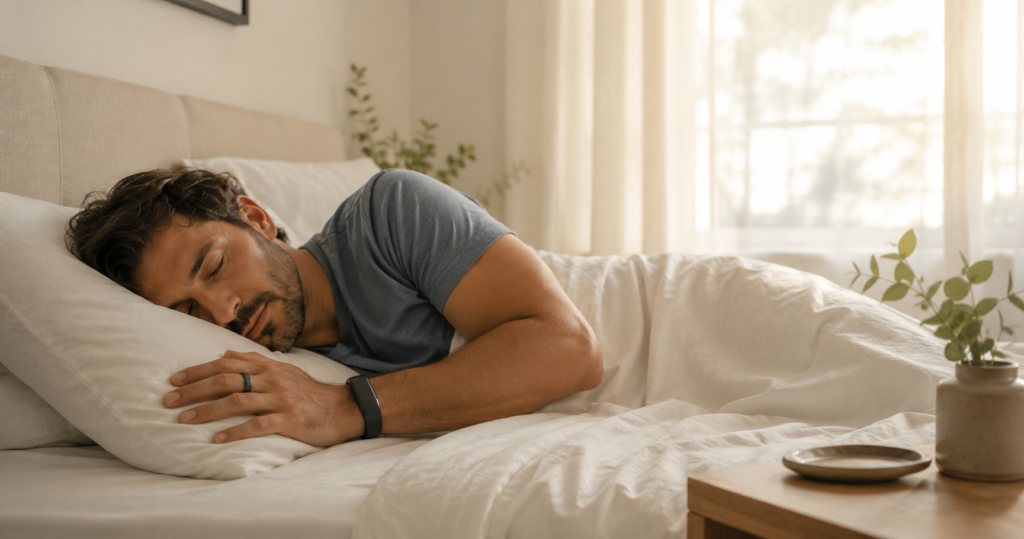
For years, “how many hours did you sleep?” was the only question that mattered. But if you’ve ever slept a full eight hours and still woken up exhausted, you already know that number doesn’t tell the whole story. To truly optimize your health, you need to track sleep biomarkers.
In 2026, sleep science has moved well past the hour count. Researchers and wearable makers are now tracking sleep biomarkers — measurable signals like skin temperature, heart rate variability (HRV), and circadian rhythm stability. These metrics reveal what’s actually happening beneath the surface of your rest: your hormone balance, your recovery capacity, and how well your internal body clock is working. Understanding these sleep biomarkers is the key to unlocking better energy levels.
Why “Hours Slept” Isn’t Enough Anymore
Sleep quality isn’t just about quantity — it’s about whether your body actually cycles through the stages it needs: light sleep, deep sleep, and REM. Two people can both sleep 8 hours and have completely different outcomes depending on how disrupted or hormonally out of sync that sleep was. For more on how hormones affect your body, check out our guide on reducing cortisol.
7 Essential Sleep Biomarkers You Should Track
According to research published by the Sleep Foundation, monitoring specific physiological signals can provide a roadmap for better health. Here are the top sleep biomarkers to watch.
1. Heart Rate Variability (HRV)
HRV measures the tiny variations in time between each heartbeat. Higher HRV generally indicates better recovery and lower stress. Tracking this sleep biomarker helps you understand if your nervous system is ready for a tough workout or needs more rest.
2. Skin and Core Body Temperature
Your body temperature naturally drops in the evening to initiate sleep. A spike in this sleep biomarker can signal illness or overtraining. To support this natural drop, consider creating a night wind-down routine.

3. Resting Heart Rate (RHR)
A lower RHR during sleep is a strong indicator of cardiovascular health and efficient recovery. It is one of the most reliable sleep biomarkers for daily monitoring.
4. Respiratory Rate
Sudden changes in breaths per minute can flag disrupted breathing or the onset of a fever. The CDC emphasizes the importance of environmental factors in maintaining steady breathing patterns.
5. Deep Sleep and REM Cycles
The distribution of sleep stages is a critical sleep biomarker. Deep sleep is for physical repair, while REM is for cognitive processing. If you struggle with muscle recovery, you might need more deep sleep; learn about magnesium for muscle relaxation.
6. Circadian Rhythm Stability
Consistency in your sleep-wake timing is a powerful sleep biomarker. Irregular schedules can lead to “social jetlag,” which disrupts metabolic health and mood.
7. Oxygen Saturation (SpO2)
Monitoring blood oxygen levels during the night can help identify potential issues like sleep apnea. This sleep biomarker is now commonly tracked by most high-end smartwatches.
How to Improve Your Sleep Biomarkers Naturally
Improving your sleep biomarkers doesn’t always require medical intervention. Simple habits like getting morning sunlight, cooling your bedroom to 65°F, and limiting alcohol can make a massive difference in your HRV and temperature trends.
Final Thoughts
Hours slept will always be part of the picture — but it’s an incomplete one. By focusing on these 7 sleep biomarkers, you gain a far richer understanding of your body’s hormonal rhythms and overall recovery. Start tracking your trends today for a more energized tomorrow.
Disclaimer: This article is for informational purposes only and is not medical advice. Consumer wearables are not diagnostic medical devices. Consult a healthcare provider for any persistent sleep concerns.