
Collagen for crepey skin after 40 can feel like a confusing subject: your neck, arms, or hands may look thinner and more finely lined, while product claims promise far more than research can support. Here is the calm, practical version—what collagen peptides may do, what they cannot do, and how to decide whether a short trial is worth your time.
Quick answer
What to realistically expect
Research suggests that oral hydrolyzed collagen peptides may lead to modest improvements in skin hydration and elasticity when used consistently for weeks to months. They are not a fast “skin reset,” and results vary. The best approach is a time-limited trial alongside daily sunscreen, moisturizer, and clinician-approved topical care.
Does collagen for crepey skin after 40 actually help?
When researchers study collagen for crepey skin after 40, they typically test oral hydrolyzed collagen peptides against a placebo. A 2023 systematic review and meta-analysis found that collagen supplements were associated with improvements in skin hydration and elasticity across multiple trials. That is encouraging, but it deserves context: studies use different ingredients, doses, participant ages, and study designs. Visible change may be subtle, especially when sun damage or menopause-related changes are already significant.
In other words, collagen can be a reasonable option for someone who wants to support skin from the inside, but it should not replace the basics that have stronger long-term evidence: broad-spectrum sunscreen, gentle cleansing, moisturizer, and a conversation with a dermatologist when changes are bothering you.

Why crepey-looking skin becomes more noticeable after 40
“Crepey” describes a thinner, finely wrinkled texture that can appear on the neck, chest, arms, knees, or hands. Natural changes in collagen and elastin production are part of aging. Years of ultraviolet exposure, lower skin hydration, smoking, and hormonal shifts around perimenopause or menopause can all make the texture more visible. The American Academy of Dermatology also notes that menopause can bring dryness and changes in skin structure.
That is why one supplement rarely tells the whole story. Collagen for crepey skin after 40 is most useful when you pair it with habits that reduce further damage and support the skin barrier.
| Question | Practical, evidence-aware answer |
|---|---|
| Which form is studied? | Hydrolyzed collagen or collagen peptides—small protein fragments designed to dissolve easily. |
| What dose appears in trials? | Commonly 2.5–10 g daily; around 5 g is frequently used in research. |
| When might changes appear? | Usually after 8–24 weeks, and the effects tend to be gradual. |
| Does a collagen cream rebuild skin? | Topical collagen mostly acts at the surface. Sunscreen, retinoids when tolerated, and barrier-supporting moisturizers have more established topical roles. |
| Is it safe? | Often well tolerated by adults, but source-specific allergies and personal health situations matter. |
How to choose collagen for crepey skin after 40 without getting pulled into hype
A good label should make it easy to understand what you are taking. Look for hydrolyzed collagen peptides, a clearly stated serving size in grams, the collagen source (such as bovine or marine), and allergen information. Vitamin C helps normal collagen formation in the body; it can come from the formula or from food in your regular diet.
Be more cautious with “proprietary blends” that do not disclose amounts, before-and-after claims that imply a guaranteed outcome, or products that promise to reverse aging quickly. For collagen for crepey skin after 40, clarity and consistency matter more than a flashy promise. For a label-first checklist, see our collagen comparison guide before reviewing any offer.
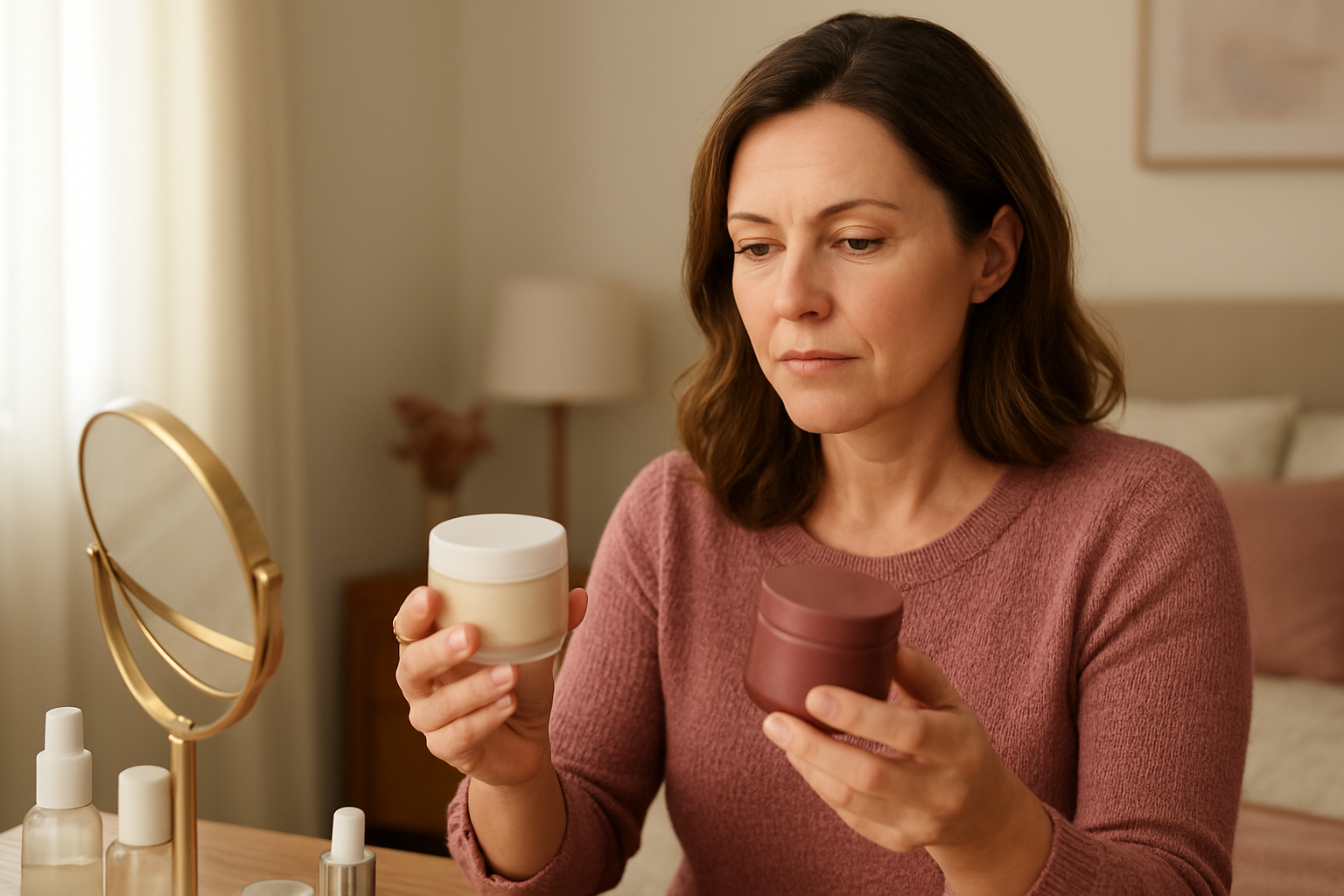
A simple collagen for crepey skin after 40 trial plan
- Pick one clear formula. Choose hydrolyzed collagen peptides with a transparent dose and source.
- Use it consistently. Take the amount on the label daily, at a time you will remember.
- Keep the routine basic. Add daily SPF, a moisturizer with humectants or ceramides, and clinician-approved retinoid care if appropriate for you.
- Track calmly. Take photos in the same lighting before you start and again at weeks 8 and 12. Notice hydration, texture, comfort, and your budget—not just tiny day-to-day changes.
- Decide with real information. If the result feels worthwhile, continue. If not, stop without guilt and discuss other options with a qualified professional.
Safety and who should pause before starting
Collagen supplements are generally considered low risk for many healthy adults, but “generally” is not the same as right for everyone. Avoid sources you are allergic to—for example, marine collagen if you have a fish or shellfish allergy. If you are pregnant, breastfeeding, managing a medical condition, or taking several medications, check with your clinician or pharmacist first. A qualified dermatologist can also help if skin changes are sudden, itchy, painful, or accompanied by a rash.
What results are realistic with collagen for crepey skin after 40?
If collagen for crepey skin after 40 helps, the change is more likely to feel like slightly better hydration or resilience than a dramatic erasure of lines. Many people also find that taking consistent photos prevents them from judging progress by a bad mirror day. Your skin’s baseline, hormone stage, sun exposure, nutrition, and sleep all influence what you notice.
For a deeper look at the research, see the published systematic review and meta-analysis of oral collagen supplements, and review the American Academy of Dermatology’s guidance on skin during menopause.

Frequently asked questions
Can collagen for crepey skin after 40 help the neck and hands?
Trials measure skin properties at different body sites, but individual results differ. Those areas also receive substantial sun exposure, so SPF and moisturizer remain essential.
Should I use powder, capsules, or liquid collagen?
Choose the form you can take consistently. Compare the actual grams of hydrolyzed collagen per serving, not only the marketing on the front label.
How do I know whether it is worth it?
Give one product an 8–12 week trial, keep your routine stable, compare consistent photos, then decide whether the subtle benefit is worth the ongoing cost.
Compare a clear, label-first option
Review the producer’s current price, order options, shipping details and the latest product information before you decide.
Affiliate disclosure
Some links on VitalHarmonyFit may be affiliate links. If you choose to purchase through one, we may earn a commission at no extra cost to you. We focus on educational, evidence-aware content and do not promise individual results.