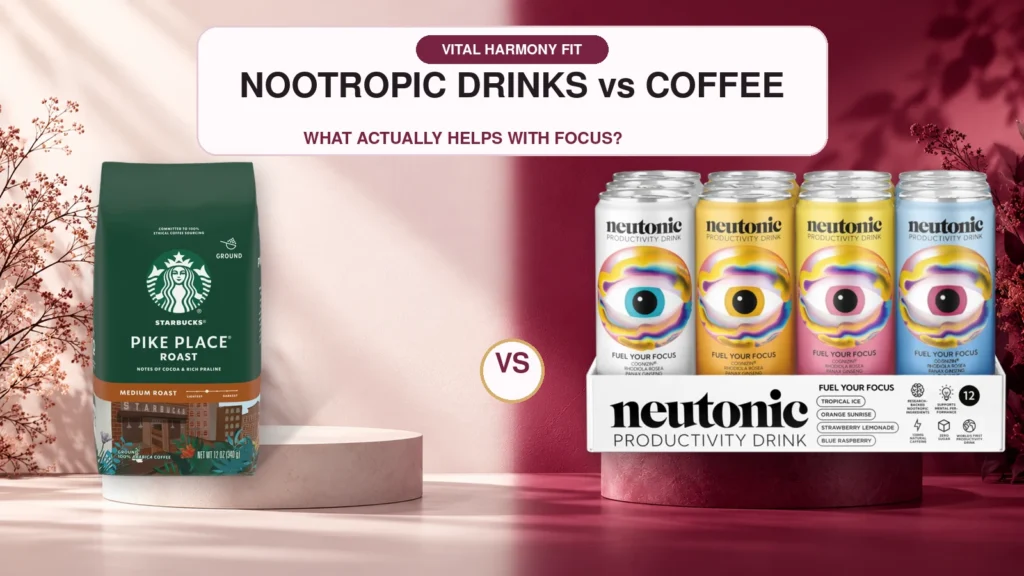
Nootropic drinks vs coffee is a practical choice for anyone looking for steadier focus without paying for promises that a label cannot support. Nootropic drinks are showing up everywhere with claims of smoother energy, sharper attention, and fewer coffee jitters. But are ingredients such as L-theanine and Lion’s Mane actually an upgrade—or is regular coffee still the smarter choice?
Quick Answer
For nootropic drinks vs coffee, regular coffee remains the most evidence-backed, inexpensive option for short-term alertness and attention. Nootropic drinks can make sense when they disclose useful doses and combine caffeine with ingredients such as L-theanine, but a longer ingredient list does not automatically mean better focus. Lion’s Mane is interesting, yet human evidence is still much smaller and less consistent than the evidence for caffeine.
Why Nootropic Drinks vs Coffee Is a Popular Question
The wellness market is moving beyond traditional energy drinks. New formulas increasingly pair moderate caffeine with amino acids, mushrooms, choline compounds, and botanicals. The pitch is appealing: energy without feeling overstimulated. For shoppers, however, the label matters more than the marketing language.
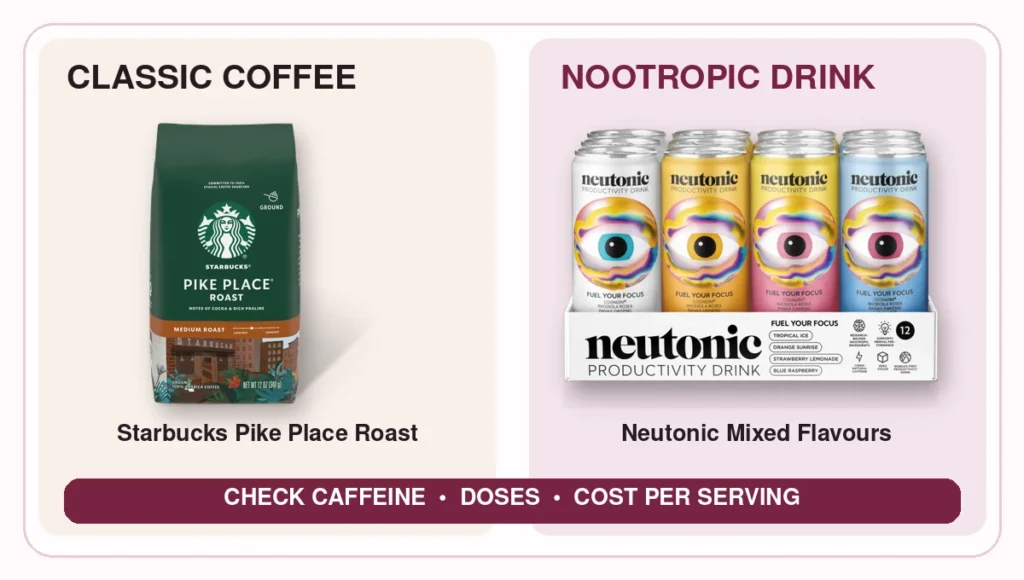
Coffee vs Nootropic Drinks: The Fast Comparison
| What matters | Coffee | Nootropic drink |
|---|---|---|
| Main active ingredient | Caffeine | Usually caffeine plus added compounds |
| Evidence for acute attention | Strong | Depends heavily on formula |
| Dose transparency | Caffeine varies by brew | Can be excellent—or hidden in blends |
| Cost | Usually lower | Usually higher |
| Best fit | Simple alertness and routine | People wanting a specific disclosed combination |
1. Caffeine: Still the Ingredient to Beat
A 2025 systematic review and meta-analysis of 31 randomized trials found that caffeine acutely improved both reaction time and accuracy on attention tasks in healthy adults. That does not mean more is always better. Higher doses improved reaction time, while accuracy eventually stopped improving in a simple dose-dependent way.
The U.S. FDA says that for most adults, 400 mg of caffeine per day is an amount not generally associated with negative effects, although sensitivity varies considerably. Too much can cause jitters, anxiety, headache, nausea, upset stomach, or sleep problems.
2. L-Theanine: One of the More Interesting Add-Ons
L-theanine is an amino acid naturally found in tea. This is one of the few trendy focus ingredients with a growing body of randomized human research. A 2026 meta-analysis covering 31 randomized trials found a short-term improvement in choice reaction time after a 200 mg dose, while effects on stress and anxiety were less certain.
A separate 2025 systematic review found small-to-moderate signals favoring L-theanine plus caffeine for several cognition and mood outcomes, while also emphasizing uncertainty in the size and consistency of those effects. Translation: promising is not the same thing as guaranteed.
3. Lion’s Mane: Exciting, but Keep Expectations Realistic
Lion’s Mane mushroom has become a star ingredient in mushroom coffees and brain-health drinks. Human research is intriguing, including small randomized studies, but it is nowhere near as established as caffeine. Reviews of human mushroom studies describe mixed intervention results and call for larger, better-controlled trials.
That makes Lion’s Mane a reasonable ingredient to watch—not a reason to believe a beverage will instantly make you smarter.
4. Alpha-GPC, Citicoline and Big “Brain Blend” Labels
Choline-related ingredients frequently appear in premium focus formulas. Their presence can make a label sound sophisticated, but shoppers should resist judging a product by the number of ingredients. Look for the exact amount of each active ingredient and avoid assuming a proprietary blend contains clinically meaningful quantities.
Vita Label Check
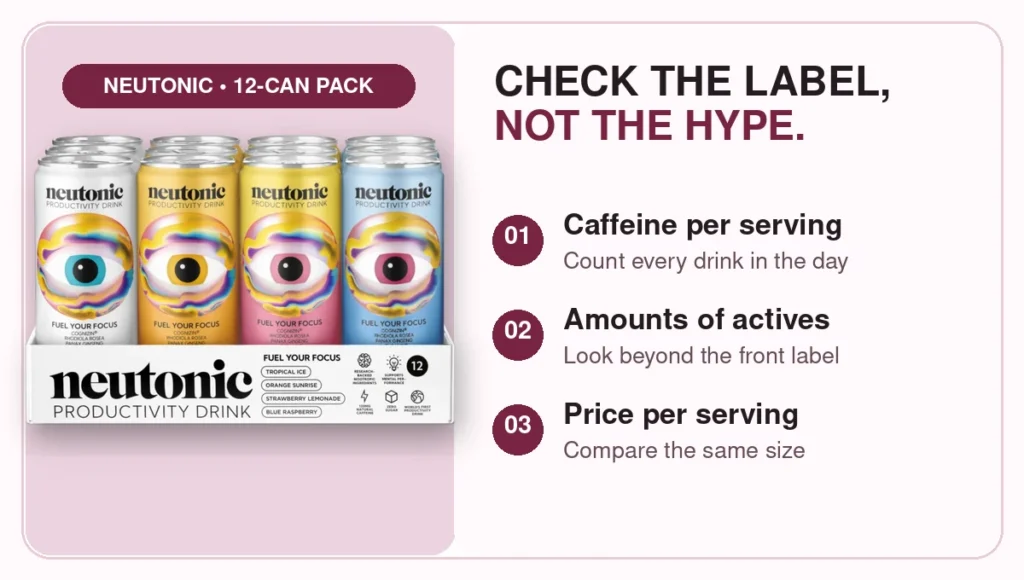
When comparing nootropic drinks vs coffee, read the caffeine amount per serving first. Then check the can size and number of servings: two servings in one container can double the amount you actually drink. Compare added sugar, L-theanine and other actives by their listed amounts, not just by how prominently they appear on the front of the package. If the label uses a proprietary blend without individual amounts, you cannot tell how much of each ingredient is present.
Finally, divide the package price by the number of servings you would really use. A beverage that costs several times as much as coffee should offer a specific convenience or preference you value. An ingredient list by itself is not evidence that the finished drink improves focus.
So, Which One Is Better for Focus?
Choose coffee if you tolerate caffeine well, enjoy it, want a simple ingredient list, and mainly need short-term alertness. Consider a nootropic drink if you want a clearly dosed caffeine + L-theanine combination or prefer a ready-to-drink format—and the product is transparent about what is inside.
If caffeine already makes you anxious or interferes with sleep, adding a fancy label around the caffeine will not fix the underlying issue. A lower-caffeine or caffeine-free choice may make more sense.
What About Mushroom Coffee?
Mushroom coffee sits between these categories. It can be enjoyable and may contain less caffeine depending on the formula, but the word “mushroom” does not guarantee a cognitive benefit. Check which mushroom species is included, what part of the mushroom is used, how much is present, and whether the company provides meaningful quality information.
How to Shop Smarter: Nootropic Drinks vs Coffee
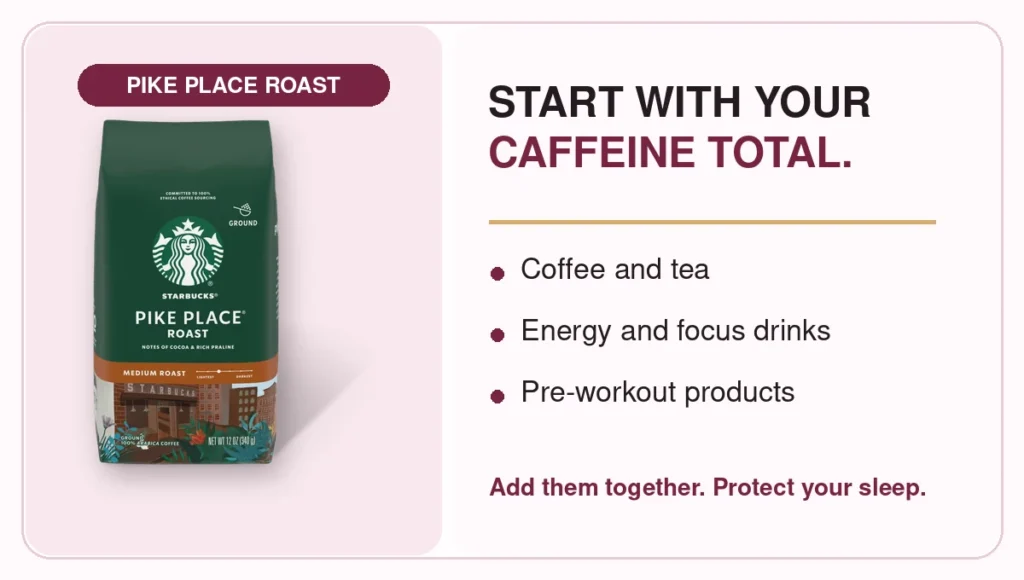
- Start with caffeine. Count coffee, tea, energy drinks, pre-workout, and focus drinks together.
- Prefer transparent labels. Exact amounts beat mysterious proprietary blends.
- Do not pay for ingredient clutter. Ten trendy ingredients at tiny doses may be less useful than a simpler formula.
- Protect your sleep. Better daytime focus is not a win if the product keeps you awake at night.
- Be skeptical of medical-style promises. A beverage is not a treatment for ADHD, dementia, depression, or another medical condition.
A practical one-week comparison
If you are comparing nootropic drinks vs coffee for your own routine, write down the caffeine per serving, the time you drink it, the cost, and how you feel later in the day. Use a consistent serving size and avoid drawing conclusions from a single unusually stressful or sleepless day. Notice whether the drink changes your ability to work comfortably, whether you feel jittery, and whether bedtime becomes harder. This personal log cannot prove a medical effect, but it can make the purchasing decision more concrete.
Read the label before making a switch. If you normally have a small coffee, a large ready-to-drink can might supply more caffeine than you expect. If you consume several caffeinated products in the same day, add them together. The FDA’s guide to caffeine explains that individual sensitivity varies; its often-cited 400 mg daily figure applies to most adults and is not a personal target or a recommendation to drink that much.
Another simple check is to decide why you are buying the beverage. For convenience, compare a ready-to-drink can with brewed coffee you can carry. For taste, compare sugar and sweetener preferences. For focus, prioritize the exact amount of caffeine and any additional ingredient rather than a general “brain blend” claim. If sleep is your main problem, our guide to magnesium and sleep covers a related question about supplement expectations.
Frequently Asked Questions
Are nootropic drinks better than coffee?
In a nootropic drinks vs coffee comparison, not automatically. Coffee has much stronger evidence for acute alertness and attention. A well-formulated nootropic drink may offer a useful combination, but effectiveness depends on its ingredients and doses.
Does L-theanine cancel caffeine jitters?
It is often marketed that way, and research on caffeine plus L-theanine is promising for some attention outcomes. Individual responses still vary, so it should not be treated as a guaranteed antidote to too much caffeine.
Does Lion’s Mane improve focus immediately?
Evidence is still limited. Small human studies have produced interesting findings, but current research does not justify promising an immediate or dramatic cognitive boost.
How much caffeine is too much?
The FDA cites 400 mg per day for most adults as an amount not generally associated with negative effects, but some people experience unwanted effects at much lower amounts. Pregnancy, medications, health conditions, and individual sensitivity can change what is appropriate.
The Bottom Line
The nootropic drinks vs coffee decision starts with your response to caffeine, your budget and the product’s ingredient label. Coffee is a straightforward choice for many adults seeking short-term alertness. A nootropic drink may be convenient if its caffeine and other ingredient amounts are clearly disclosed, but its extra ingredients do not guarantee a better result. Compare one serving at a time, protect your sleep and avoid paying extra for claims you cannot verify.
Educational information only. This article is not medical advice and does not diagnose or treat any condition. If you are pregnant, take medication, have a medical condition, or are unusually sensitive to caffeine, discuss supplements and concentrated caffeine products with a qualified healthcare professional.
Research & References
- U.S. Food and Drug Administration: “Spilling the Beans: How Much Caffeine is Too Much?”
- Kløve K, Petersen A. A systematic review and meta-analysis of the acute effect of caffeine on attention. Psychopharmacology. 2025.
- Gerolymos C, et al. Cognitive and affective effects of L-Theanine: a systematic review and meta-analysis of 31 randomized trials. 2026.
- Payne ER, et al. Effects of Tea or its Bioactive Compounds L-Theanine or L-Theanine plus Caffeine on Cognition, Sleep, and Mood. Nutrition Reviews. 2025.
Check caffeine, L-theanine, sugar and price per serving on each label.
View Neutonic Nootropic Drink Variety Pack on Amazon →As an Amazon Associate, VitalHarmonyFit may earn from qualifying purchases.
Pingback: Magnesium vs Melatonin for Sleep: 5 Essential Checks