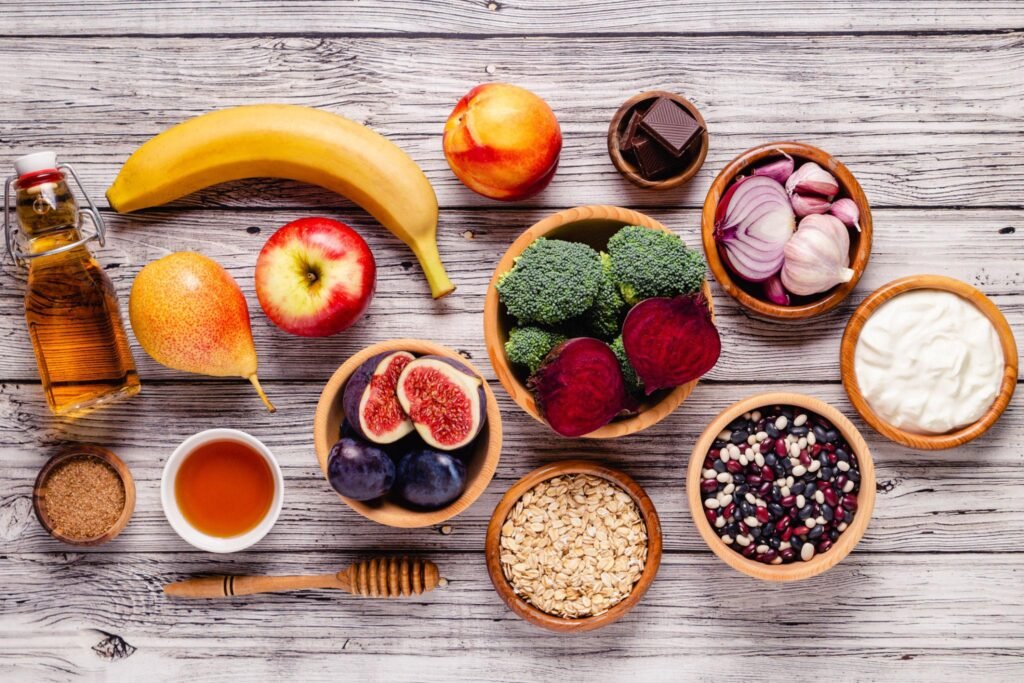
What can you actually do for gut health while managing your weight?
If your goal is to lose weight without wrecking your digestion, the useful strategy is not a cleanse or a “fat-burning microbiome” supplement. It is building habits that support regular digestion, satiety and a routine you can keep.
Prioritize food quality, gradual fiber, adequate protein, fluids, movement, sleep and realistic portions. Use probiotics or fiber supplements only when they solve a specific gap, not because a label promises faster fat loss.
| Habit | Why it may help | Watch for |
|---|---|---|
| Increase fiber gradually | Supports bowel regularity and can make meals more filling. | A sudden jump can cause gas or bloating. |
| Include protein in meals | Can support satiety and muscle maintenance. | Do not let protein crowd out fiber-rich foods. |
| Use fermented foods if tolerated | Adds dietary variety and live cultures in some foods. | Not every fermented food is a proven probiotic. |
| Stay adequately hydrated | Helps fiber function and supports normal digestion. | Fluid needs differ between people. |
| Walk and strength train | Supports overall health and weight management. | Consistency matters more than punishment workouts. |
1. Build meals around plants and protein
A simple plate with vegetables or fruit, a protein source and a high-fiber carbohydrate is more useful than chasing one “gut-health” ingredient. Variety also makes it easier to increase fiber without relying entirely on powders.
2. Increase fiber slowly
If you currently eat little fiber, doubling it overnight can make you feel worse. Add one food or serving at a time. The NIDDK recommends increasing fiber gradually and drinking enough liquids to help it work properly.
3. Use probiotics for a reason, not as a fat burner
Probiotics are strain-specific. If you choose one, compare the actual strain, CFUs through the expiration date, storage directions and the goal it has been studied for. Our probiotic guide explains what to look for.
4. Sleep like it belongs in the plan
Poor sleep can make hunger, food choices and training consistency harder to manage. Treat sleep as part of the weight-management system rather than an optional wellness extra.
5. Manage stress without blaming cortisol for everything
Stress can affect appetite, sleep and digestive symptoms, but it is too simplistic to say that every stubborn area of body fat is caused by cortisol. Focus on practical stress-management habits you can repeat.
6. Move after meals when it fits
A walk after a meal is a low-friction habit that supports activity and may feel better than trying to compensate with occasional extreme workouts.
7. Choose supplements by the gap
If food does not provide enough fiber, compare a fiber supplement by type and serving size. If you are considering probiotics, compare strains. If neither solves a defined problem, you may not need another supplement.
Frequently asked questions
Do I need probiotics to lose weight?
No. Probiotics are not required for weight loss and should not be treated as a substitute for diet, activity, sleep and other relevant factors.
What is the best fiber for weight management?
There is no universal “best.” Psyllium is well studied for regularity and can fit some routines, while other fibers may be better tolerated by different people. Compare our fiber guide.
How fast should I increase fiber?
Gradually. A rapid increase is a common reason people feel more bloated when they try to “eat healthy.”
Can gut health explain all weight problems?
No. Weight is influenced by many biological, behavioral and medical factors. The gut is one part of a larger system.
This article is educational and is not medical advice.
Practical Visual Guide




Why gut-friendly habits work better than “microbiome hacks”
Weight management is influenced by food intake, activity, sleep, medications, stress, hormones and many other factors. Gut health can be part of that picture, but it is not a shortcut around the basics. Fiber-rich foods, adequate protein and regular movement are practical because they support fullness, digestion and overall health at the same time.
Start with one or two changes you can repeat. Add a vegetable or bean serving, choose a higher-fiber breakfast, take a short walk after meals, or improve sleep timing. Small habits are easier to evaluate than an extreme gut reset.
Build fiber gradually
Increasing fiber too quickly can cause bloating and gas. Add it gradually and drink enough fluid. If symptoms remain uncomfortable, reduce the pace and consider whether a specific food or supplement is the problem.
FAQ
Do probiotics cause weight loss?
Not reliably. Research varies by strain and population, so probiotics should not be treated as a primary weight-loss tool.
What is the simplest place to start?
Choose meals with protein and fiber, move regularly, protect sleep and use digestive comfort as feedback.
Compare evidence, ingredients and realistic expectations before choosing your next wellness product.
A one-week gut-friendly reset that is not extreme
For one week, keep meals simple and consistent rather than restrictive. Include a protein source at each meal, add one or two fiber-rich foods you tolerate, drink regularly, and take a short walk most days. Keep highly processed snack foods and alcohol moderate rather than trying to eliminate every category at once.
At the end of the week, look at hunger, digestion, energy and how easy the routine was to repeat. The best plan is not the most dramatic one; it is the one that can become normal.
What to do if fiber makes you feel worse
Reduce the pace, not necessarily the goal. Smaller increases give the digestive system time to adapt. If symptoms are severe, persistent or accompanied by pain, bleeding or unexplained weight loss, get medical advice instead of pushing through discomfort.
How to tell whether the routine is helping
Look for practical signals: more regular digestion, steadier hunger, better meal consistency, enough energy to stay active and a routine that does not require constant willpower. Weight can fluctuate from hydration and digestion, so weekly trends are more useful than reacting to a single day.
If the routine feels sustainable but progress is not matching your goals, adjust one variable at a time. That might mean portion size, snack frequency, protein intake, movement or sleep. Making several aggressive changes at once makes it difficult to know which one mattered.
Do you need a supplement?
Not necessarily. A supplement can be useful when there is a clear gap, such as difficulty reaching fiber needs with food, but it should solve a defined problem. Compare serving size, ingredients and tolerance, and start gradually. A product that promises to “repair the gut” or guarantee weight loss deserves skepticism.
For many people, the most useful gut-health strategy is simply a repeatable eating pattern with enough plants, protein, fluids and movement. That is less exciting than a cleanse, but much easier to maintain.
Bottom line: use gut-friendly habits to make a healthy routine easier to sustain, not as a promise of automatic weight loss. Consistency, food quality, sleep and movement still do most of the practical work.
Keep the plan simple enough that you can repeat it even on busy weeks, because consistency is what turns a helpful habit into a real routine.