
Amino Acid Supplements for Muscle After 50: What Actually Works
If strength feels harder to maintain after 50, stairs feel more tiring than they used to, recovery takes longer, or your appetite is smaller, it is reasonable to start asking what supports muscle as you age. Those changes can have many causes and do not automatically mean you need a supplement. Before buying one, though, it helps to separate the real question — how to support muscle after 50 — from the product category being marketed to you.
Start here: are you eating enough total protein, doing resistance exercise, losing weight unintentionally, or struggling to get protein-rich meals in consistently? An amino acid supplement is one possible tool, not the starting point for everyone.
| What you are noticing | What to check first |
|---|---|
| Strength feels harder to maintain | Resistance training, total protein, calories, sleep and health changes. |
| Recovery feels slower after workouts | Training load, protein distribution, hydration and rest. |
| Appetite is smaller | Whether meals still provide enough protein and total energy. |
| Unplanned weight or strength loss | Do not assume it is normal aging; discuss persistent or unexplained changes with a healthcare professional. |
Why Muscle Loss Speeds Up After 50
Sarcopenia describes age-related loss of muscle mass, strength and function. Risk increases with age, but the rate is not the same for everyone. Physical inactivity, low calorie or protein intake, illness, medications and other health factors can all contribute.
How Amino Acid Supplements for Muscle Support an Aging Body
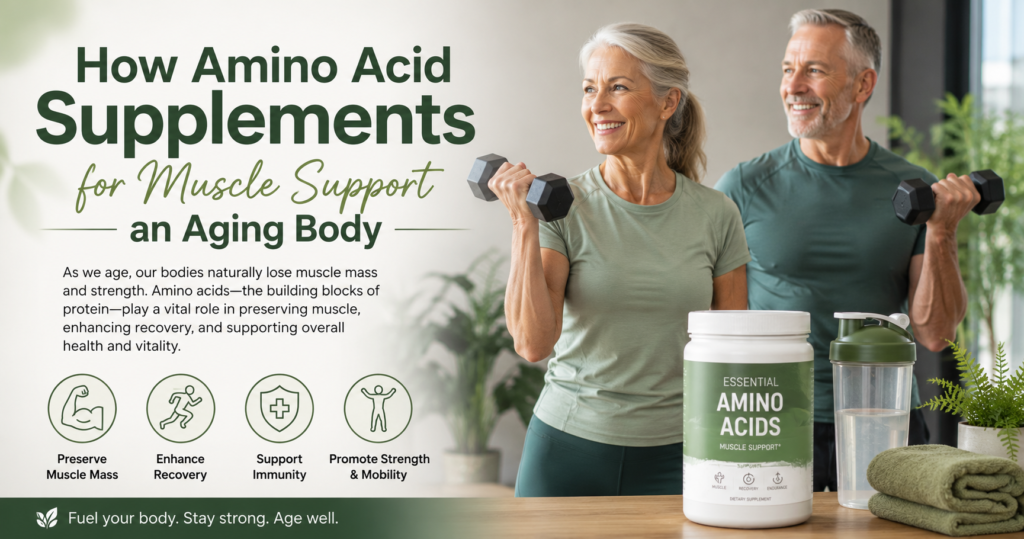
Amino acids are the individual building blocks that make up protein. Your body can produce some of them on its own, but nine are considered “essential,” meaning they must come from food or supplementation. Among these, leucine plays an outsized role: it acts almost like a switch that tells your muscles to start the repair-and-growth process (known as muscle protein synthesis).
Older adults may have a reduced muscle-building response to a given protein dose, which is one reason protein quality and adequate intake matter. Complete protein foods can provide all essential amino acids; supplements can be useful when appetite, convenience or meal size makes those targets difficult to meet.
EAA vs. BCAA: Which Amino Acid Supplements for Muscle Are Better?
Walk into any supplement aisle and you’ll see two similar-looking categories:
- BCAAs (Branched-Chain Amino Acids) — leucine, isoleucine, and valine only.
- EAAs (Essential Amino Acids) — all nine essential amino acids, including the three BCAAs.
For younger, well-fed athletes, BCAAs alone can offer a modest benefit. But for adults over 50, most nutrition researchers now lean toward full-spectrum EAA formulas. Since your body needs every essential amino acid present to actually build new muscle protein, a BCAA-only product can fall short if the rest of your diet isn’t already covering the other six. This is one of the most important distinctions to understand before buying amino acid supplements for muscle, since not every product on the shelf is formulated the same way.
What the Research Actually Shows
Research on essential amino acid supplementation in older adults is mixed and context-dependent. Some studies report benefits in muscle-related outcomes, particularly when intake is inadequate or when supplementation is combined with resistance exercise, while others show little additional benefit when baseline protein intake is already sufficient.
It’s worth noting the research isn’t unanimous — a handful of studies found no significant benefit, usually in participants whose baseline protein intake was already high. The takeaway for most people over 50 is that amino acid supplements for muscle work best as a targeted tool for people who struggle to eat enough high-quality protein at each meal, rather than a substitute for a solid overall diet. For a deeper technical dive, the Proceedings of the Nutrition Society published a detailed review of essential amino acid supplementation in older adults that’s worth a read if you want the full clinical picture.
How to Choose the Right Amino Acid Supplements for Muscle After 50
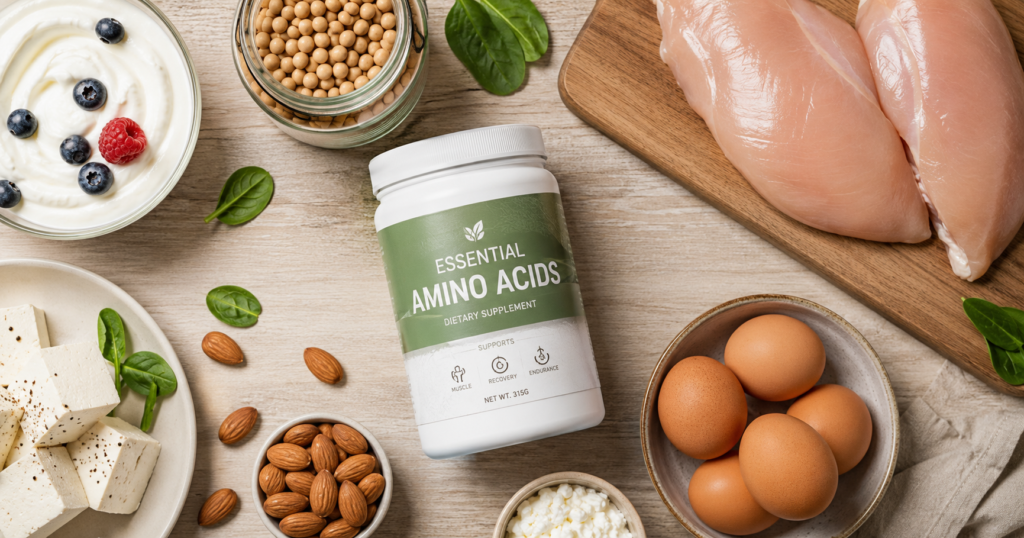
Not all products marketed toward “healthy aging” are created equal. Here’s what to look for:
- Complete amino acid profile — check which essential amino acids are actually listed and how much the serving provides.
- Transparent serving information — avoid judging a formula only by front-label claims.
- Quality and manufacturer information — look for clear sourcing, testing information and contact details.
- Minimal added sugar or fillers — some “muscle” products are closer to flavored sugar drinks than real supplements.
- Format that fits your routine — powders mix into a shake, capsules travel well, and some brands offer pre-dosed sachets for convenience.
These are the same quality checks we recommend in our guide to the best probiotics for gut health — third-party testing and label transparency matter just as much for amino acids as they do for any other supplement category.
Choosing well matters more than choosing the most expensive option. Compare the amino acid profile, serving size, added ingredients, number of servings, cost per serving and whether your regular diet already covers the same need.
Pairing Supplements With Resistance Training

Resistance training belongs at the center of a muscle-maintenance plan. Amino acids provide building blocks, but exercise supplies the stimulus for strength and muscle adaptation. A supplement cannot replace progressive resistance exercise, adequate calories, sleep and a protein-sufficient diet.
A simple, sustainable approach for someone over 50 getting started might look like:
- Include resistance exercise at least a couple of times per week if appropriate for your health and ability.
- Spread protein-rich foods across meals rather than relying on one large serving at the end of the day.
- Use a supplement only when it solves a clear gap in intake or convenience.
If gut health and nutrient absorption are also on your radar, it’s worth pairing this with our best fiber supplements for gut health guide — good digestion plays a direct role in how well your body actually absorbs the amino acids you’re taking.
Are Amino Acid Supplements for Muscle Safe for Everyone Over 50?
For most healthy adults, yes — amino acid supplements are generally well tolerated. That said, anyone with kidney disease, liver conditions, or who is on prescription medication should talk to a doctor before starting any new supplement, since amino acid metabolism is processed through the kidneys and liver. This is standard advice for any supplement category, but it’s especially relevant once other health conditions are already part of the picture.
Frequently Asked Questions
How long does it take to notice a difference? There is no universal timeline. Changes in strength or body composition depend on training, food intake, age, health status and baseline nutrition, and supplements do not guarantee a noticeable result.
Can I get the same benefit from food alone? Yes, if you’re consistently eating enough high-leucine protein (eggs, dairy, poultry, fish) at every meal. Supplements are simply a convenient way to hit that leucine threshold when food alone falls short.
Do amino acid supplements automatically cause weight gain? No. Body-weight change depends mainly on overall energy intake and expenditure. Check the specific product label for calories and serving details.
The Bottom Line
For muscle after 50, start with the fundamentals: resistance training, enough total food and protein, sleep and attention to medical issues that can affect strength or appetite. If an amino acid supplement still makes sense after that, compare the label carefully. Our Advanced Amino buying guide applies those checks to one specific option without asking you to buy before the questions are answered.