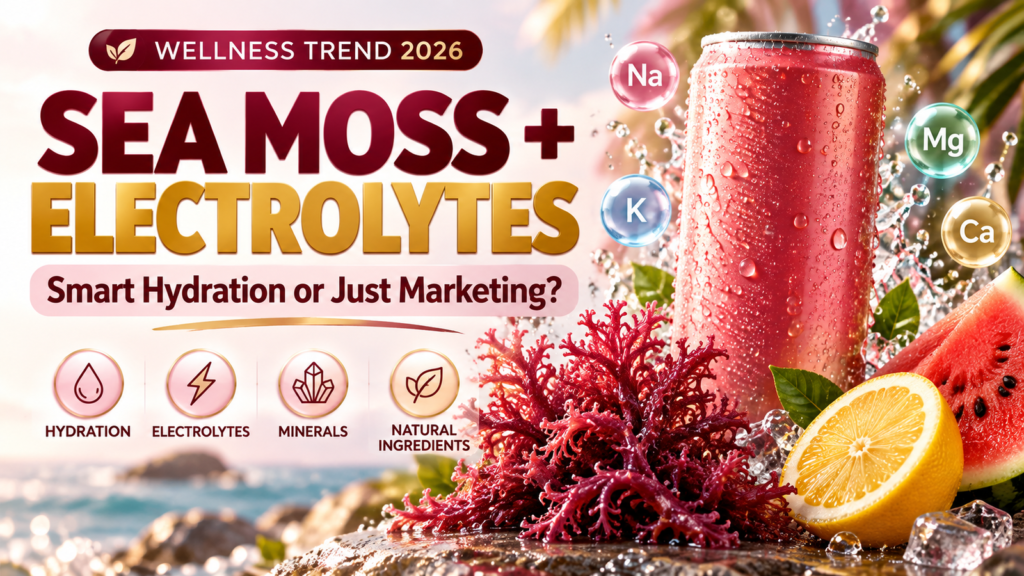
Sea moss electrolyte drinks can be useful as hydration products when they provide meaningful amounts of electrolytes, but sea moss itself should not be treated as a proven wellness cure-all. The most practical way to judge these drinks is to read the label: check sodium, potassium and magnesium, added sugar or sweeteners, the disclosed amount of sea moss, testing and sourcing, and whether your activity level actually calls for an electrolyte drink.
Sea moss electrolytes have spent the last few years bouncing between wellness shops, smoothie recipes, gummies and social-media feeds. Now the ingredient is moving into another category: ready-to-drink hydration.
That shift became especially visible in September 2026 when True Sea Moss announced a new sparkling electrolyte line made with sea moss, fruit and key electrolytes, with distribution through Amazon and TikTok Shop. The launch matters less because one product suddenly proves sea moss works, and more because it shows how a once-niche ingredient is being folded into a mainstream hydration format.
That creates a fair question for shoppers: does combining sea moss with electrolytes make a drink meaningfully better, or is it mostly clever positioning?
This guide separates what is well established about electrolytes from what is still uncertain about sea moss, then shows you what to look for on a label before spending more for a trendy formula.
Why Sea Moss Electrolytes Are Getting Attention Now
The hydration aisle has changed, and sea moss electrolytes are part of that shift. If hydration is your main goal, our electrolyte drink mix guide explains when an electrolyte product may actually be useful. Instead of only sports drinks and powdered mixes, shoppers now see sparkling waters, hydration sticks, functional sodas and wellness beverages that combine electrolytes with collagen, creatine, adaptogens, vitamins or botanical ingredients.
Sea moss fits that pattern perfectly. It already carries strong social-media recognition, while electrolytes have an obvious everyday-use story around sweat, heat, travel and exercise. Put them together in a cold sparkling drink and you get a product that is easy to understand at a glance: hydration plus a fashionable wellness ingredient.
The new launch from True Sea Moss is a good example. The company says each can contains sodium, potassium and magnesium, with approximately 410–450 mg of total electrolytes depending on flavor, and is sold on Amazon and TikTok Shop. That is commercially interesting, but consumers still need to separate the electrolyte function from the sea moss marketing story.
What Electrolytes Actually Do
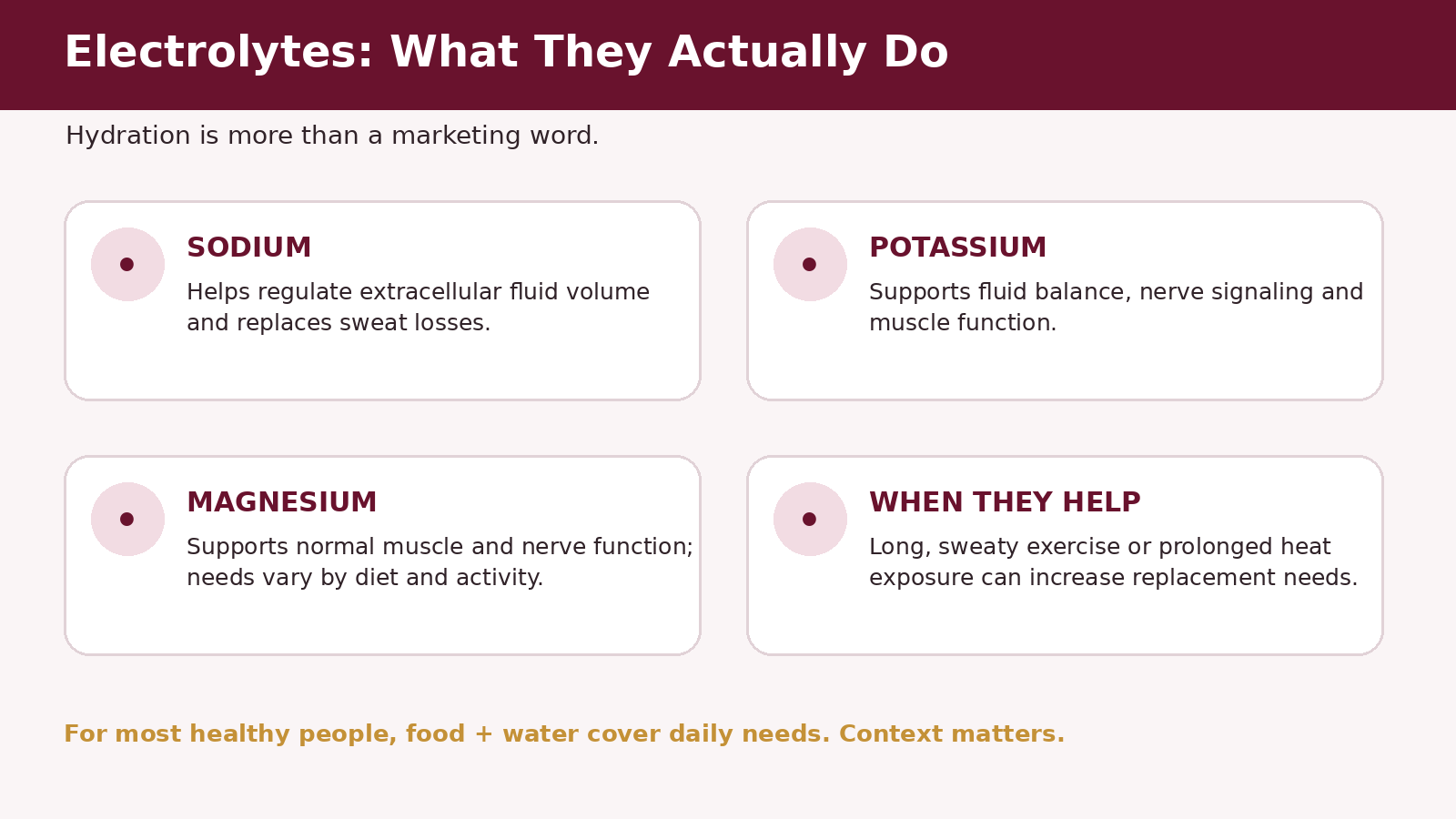
Electrolytes are minerals that carry an electrical charge in body fluids. They are involved in fluid balance, nerve signaling, muscle contraction and other normal physiological processes. The NIH Office of Dietary Supplements notes that minerals such as sodium, chloride, potassium, magnesium and calcium contribute to fluid balance and normal body function.
Sodium
Sodium is closely tied to extracellular fluid volume. During prolonged sweating, especially in hot or humid conditions, sodium losses can become more relevant. That is why many sports hydration products emphasize sodium rather than simply adding a long list of trace minerals.
Potassium
Potassium is required for normal cell function and plays an important role in fluid balance, nerve transmission and muscle contraction. Most people obtain potassium from foods, but it may also appear in electrolyte formulas.
Magnesium
Magnesium participates in hundreds of enzyme systems and is involved in normal muscle and nerve function. Its presence on a hydration label can sound impressive, but more is not automatically better; total daily intake still matters.
So What Does Sea Moss Add?
Sea moss, often associated with Irish moss and red seaweeds, naturally contains a mixture of carbohydrates, fiber-like polysaccharides and minerals. That nutrient profile is one reason it has become popular in wellness products.
But there is a major difference between saying that a seaweed contains nutrients and saying that adding it to a drink has been proven to deliver broad benefits for immunity, gut health, skin, energy, thyroid function or weight management.
Human evidence for many of the sweeping claims attached to sea moss remains limited. Baylor College of Medicine has cautioned that people should not assume they need sea moss simply because it contains vitamins and minerals, especially when a balanced diet already supplies many of those nutrients. Reviews of red-seaweed compounds also point out that evidence varies substantially depending on the specific species, preparation, dose and compound being studied.
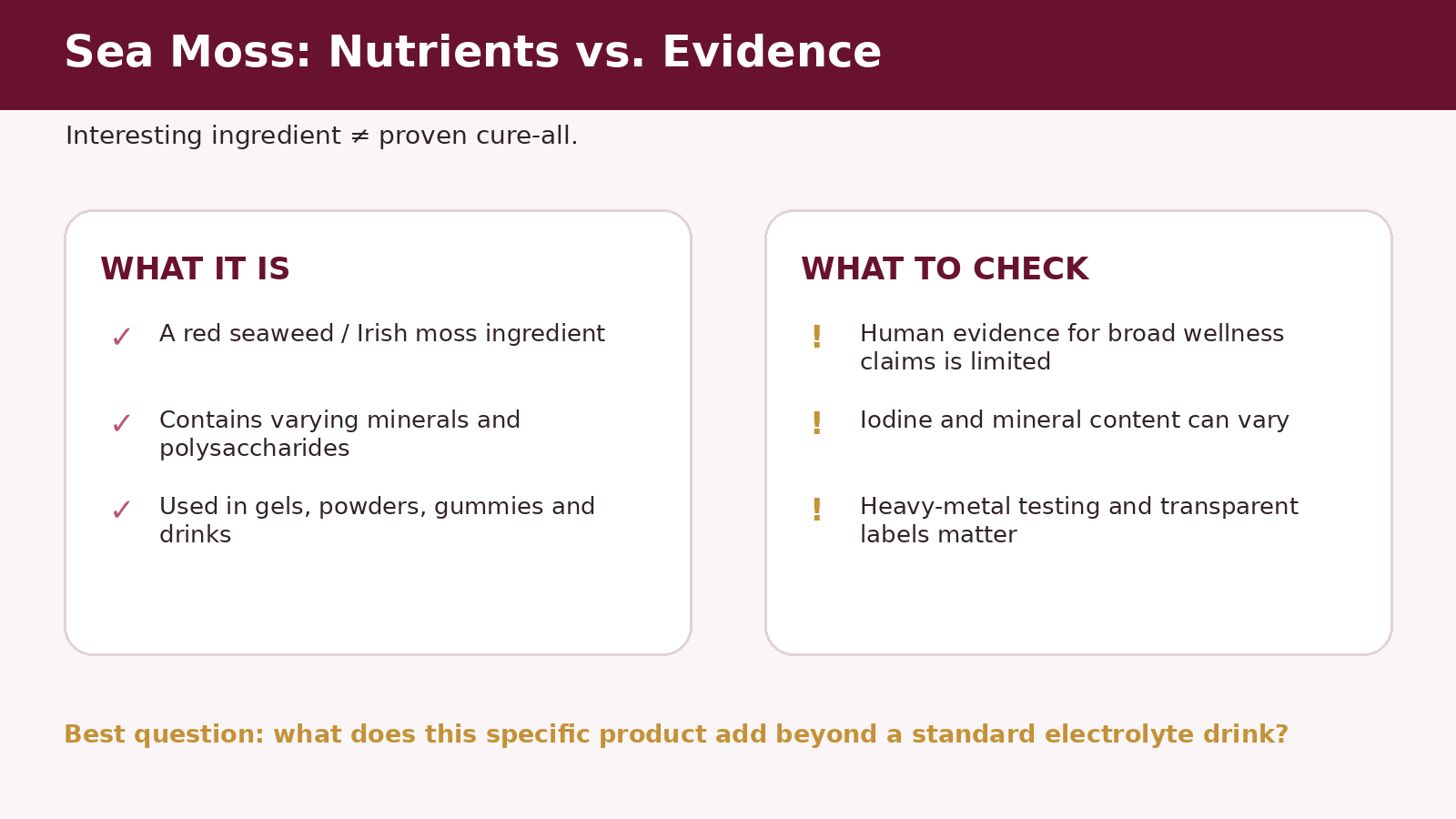
There is another reason to read labels carefully: mineral content in seaweed can vary. That includes iodine, which is nutritionally essential but can become a concern when intake is excessive. Depending on sourcing and processing, seaweed products may also require attention to contaminant testing.
For consumers, the sensible conclusion is not that sea moss is “bad” or “good.” It is that the ingredient should be judged with the same standard used for any other supplement or functional food: what is actually in this product, in what amount, and what evidence supports the claim being made?
Sea Moss Electrolyte Drink vs. Regular Electrolyte Drink
Who Might Actually Benefit From an Electrolyte Drink?
An electrolyte beverage may make more sense if you routinely do long workouts, sweat heavily, work outdoors for extended periods, exercise in heat or have a situation where fluid and electrolyte replacement is useful.
For someone sitting at a desk most of the day and eating normally, an expensive functional hydration drink may offer little practical advantage over water plus a balanced diet. That does not make the beverage useless; it simply changes the reason you are buying it. You may be paying for convenience, flavor and the overall experience rather than solving a meaningful hydration problem.
That distinction is important because wellness marketing often turns an optional convenience into something that feels essential.
What to Check Before Buying
1. Look at actual electrolyte amounts
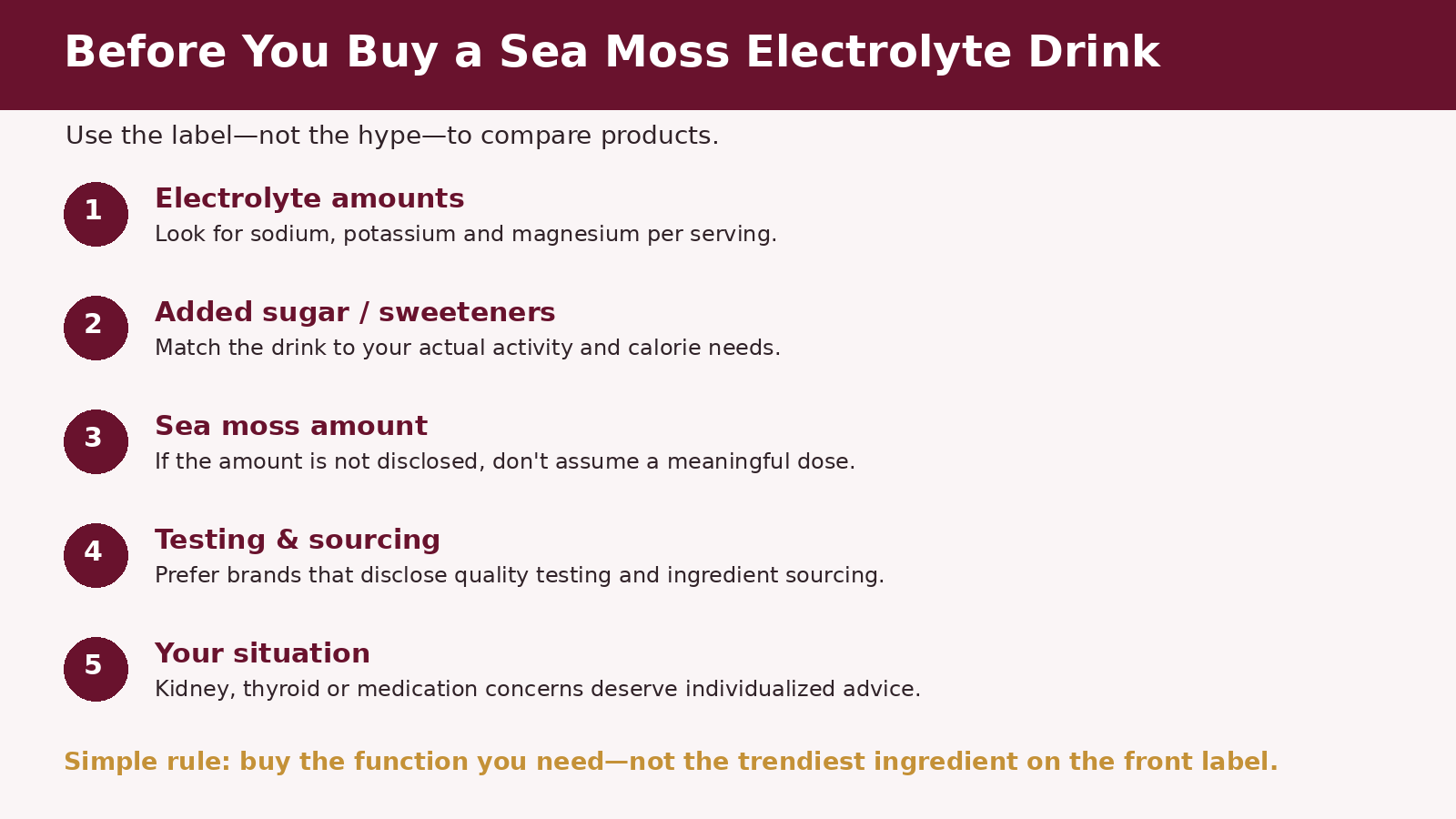
Do not stop at the word “electrolytes.” Check how much sodium, potassium and magnesium the product provides per serving. A drink can market itself as electrolyte-rich while still supplying relatively small amounts.
2. Check sugar and sweeteners
Sugar is not automatically a problem in a sports beverage, particularly during sustained exercise, but it may be unnecessary for casual hydration. Compare the label with your actual use case.
3. Find out how much sea moss is included
If a brand highlights sea moss prominently but does not disclose an amount, it is difficult to know how meaningful the ingredient is. A trendy ingredient on the front panel can still be present mainly for positioning.
4. Look for sourcing and testing transparency
Because seaweed composition can vary, quality control matters. Clear sourcing, contaminant testing and transparent labeling are more useful signals than vague claims such as “detox,” “superfood” or “cellular cleansing.”
5. Think about medications and medical conditions
People with kidney disease, thyroid conditions, electrolyte restrictions or medications that affect potassium or fluid balance should not assume every hydration product is automatically appropriate. Personalized medical guidance matters more than a social-media trend.
Is Sparkling Hydration Better?
Sparkling format changes taste and drinking experience more than physiology. Carbonation can make a beverage feel more refreshing or satisfying, which may help some people drink more fluid. Others may find carbonation uncomfortable during exercise.
The key point is simple: bubbles do not make electrolytes work better. Choose sparkling or still based on preference, tolerance and how you plan to use the drink.
The Bottom Line
Sea moss electrolyte drinks are an interesting example of where wellness is heading: familiar hydration ingredients combined with fashionable functional ingredients in convenient ready-to-drink formats.
The electrolyte side of the equation is straightforward. Sodium, potassium and magnesium have established roles in normal fluid balance, nerve and muscle function, and electrolyte replacement can be useful when sweat losses are significant. The sea moss side is more nuanced. It may contribute nutrients and interesting seaweed compounds, but broad human wellness claims remain much less certain.
If you are considering one of these drinks, judge it first as a hydration product. Then ask whether the added sea moss, flavor, convenience and brand transparency justify the price for you.
Smart Shopping Rule
Buy the function you need—not the trendiest ingredient on the front of the can. Compare electrolyte amounts, sugar, ingredient transparency and testing before paying a premium.
Frequently Asked Questions
Do sea moss drinks hydrate better than water?
Not automatically. Water is adequate for routine hydration for most healthy people. Electrolyte drinks can become more useful when sweat and fluid losses are higher. Sea moss itself has not been shown to make water inherently more hydrating.
Are electrolyte drinks needed every day?
Usually not for everyone. Most healthy people can replace everyday electrolyte losses through normal food and water intake. Needs rise with factors such as prolonged exercise, heavy sweating and heat exposure.
Is sea moss proven to improve gut health, immunity or skin?
Sea moss contains nutrients and seaweed-derived compounds, but strong human evidence for many broad wellness claims remains limited. Treat sweeping benefits with caution.
What matters most on the label?
Start with sodium, potassium and magnesium per serving, then check added sugar, serving size, the disclosed amount of sea moss, ingredient sourcing and quality-testing information.
Sources: NIH Office of Dietary Supplements guidance on electrolytes, potassium and magnesium; Baylor College of Medicine educational guidance on sea moss; peer-reviewed reviews of red-seaweed compounds; and the September 24, 2026 True Sea Moss Sparkling Hydration product announcement. This article is for educational purposes and is not medical advice.
Compare sodium, potassium, sugar and serving size; sea moss claims alone do not determine hydration value.
View Liquid I.V. Lemon Lime on Amazon →As an Amazon Associate, VitalHarmonyFit may earn from qualifying purchases.