Feeling wiped out after sweating, getting a headache after a long hot day, or wondering why plain water does not seem to help? Those symptoms can have many causes, so they do not prove you need electrolytes. But they are exactly why people start searching for an electrolyte drink mix. This guide explains what electrolytes actually do, when replacing them may make sense, and when another cause deserves attention instead.
Is dehydration really the problem?
Headache, fatigue and cramps can have several causes. Use the next guides to look at the larger hydration and recovery picture instead of assuming a powder is always necessary.
How much water do you actually need?
Start with everyday fluid needs before adding an electrolyte product.
Could magnesium be part of the question?
Understand the differences without treating every cramp as a deficiency.
Is workout recovery your real concern?
See what matters more than supplement timing alone.
| What you may notice | What to ask first |
|---|---|
| Headache or fatigue after heavy sweating | Were you exercising, working in heat, or losing a lot of fluid? |
| Muscle cramps after long activity | Cramps have many causes; look at fluids, heat, training load and overall nutrition. |
| Feeling thirsty despite drinking water | Consider recent sweat or fluid losses, but persistent excessive thirst deserves medical evaluation. |
| Normal day with little sweating | Food and water may already cover your needs; a daily electrolyte mix is not automatically necessary. |
Electrolyte Drink Mix 2026: Why Everyone Is Suddenly Talking About Them
Electrolyte powders have existed for decades in sports nutrition, but the current wave has pulled them into everyday wellness routines, not just workouts. Part of the shift comes from low-carb and ketogenic eating patterns, which naturally flush more sodium and water than a typical diet. Part of it comes from wellness culture treating hydration as a performance metric worth optimizing, the same way sleep tracking became mainstream a few years ago.
What Electrolytes Actually Do in Your Body
Electrolytes are minerals, mainly sodium, potassium, magnesium, and calcium, that carry an electrical charge and regulate some of your body’s most basic functions: muscle contraction, nerve signaling, fluid balance, and pH. Sodium is lost fastest through sweat, followed by potassium, which is why most electrolyte mixes lead with those two.
Under normal conditions, a typical diet supplies enough of these minerals without any extra effort. The need for supplementation shows up specifically when you are losing more than usual, through heavy sweating, illness, heat, or extended physical activity.
The Water Trap: Why More Water Is Not Always the Answer
Here is the part most people miss: when your electrolyte levels are already low, drinking large amounts of plain water can actually make things worse, not better. It dilutes the sodium that is left in your bloodstream, a condition called hyponatremia. This is why endurance athletes are specifically warned against over-hydrating with water alone during long events. An electrolyte drink mix, in these situations, is not just a nice-to-have. It is doing something plain water cannot.
This principle is not new. The World Health Organization built its Oral Rehydration Solution standards, used globally to treat dehydration, around the same core idea: a specific ratio of sodium and glucose speeds up water absorption in the gut far more effectively than water on its own, as detailed in the WHO oral rehydration salts formulation.

Who Actually Benefits From an Electrolyte Drink Mix
Based on how sports medicine physicians and dietitians talk about this, the clearest use cases are fairly specific. Athletes and anyone doing an hour or more of moderate to intense exercise, especially in heat, are the strongest candidates. People on low-carb or ketogenic diets tend to excrete more sodium and often notice fewer headaches and less fatigue once they add electrolytes back in. Frequent travelers, people recovering from illness involving vomiting or diarrhea, and anyone working long hours in hot environments round out the list.
Where it gets murkier is everyday, low-activity use. If you are not sweating heavily, not doing sustained intense exercise, and eating a reasonably varied diet, you are likely getting adequate electrolytes from food already, and a daily mix may simply be an expensive habit rather than a necessary one.
What to Look For, and What to Avoid
Not all electrolyte mixes are built the same way, and the differences matter more than the marketing suggests.
Check the sodium-to-potassium ratio. Higher-sodium formulas suit heavy sweaters and longer workouts. A more moderate profile is usually better suited to everyday hydration.
Understand the role of sugar. A small amount of glucose can genuinely help the body absorb sodium faster, through the same co-transport mechanism the WHO’s rehydration formula relies on. But some products lean on sugar mainly for taste, turning a hydration product into a sports drink with unnecessary calories. Sugar-free options sweetened with stevia or monk fruit are a reasonable middle ground for daily use.
Watch for magnesium form. Several popular mixes use magnesium glycinate specifically because it is gentler on digestion than older forms, the same reasoning that has made it one of the most searched supplements this year on its own.
Electrolyte Mixes vs. Traditional Sports Drinks
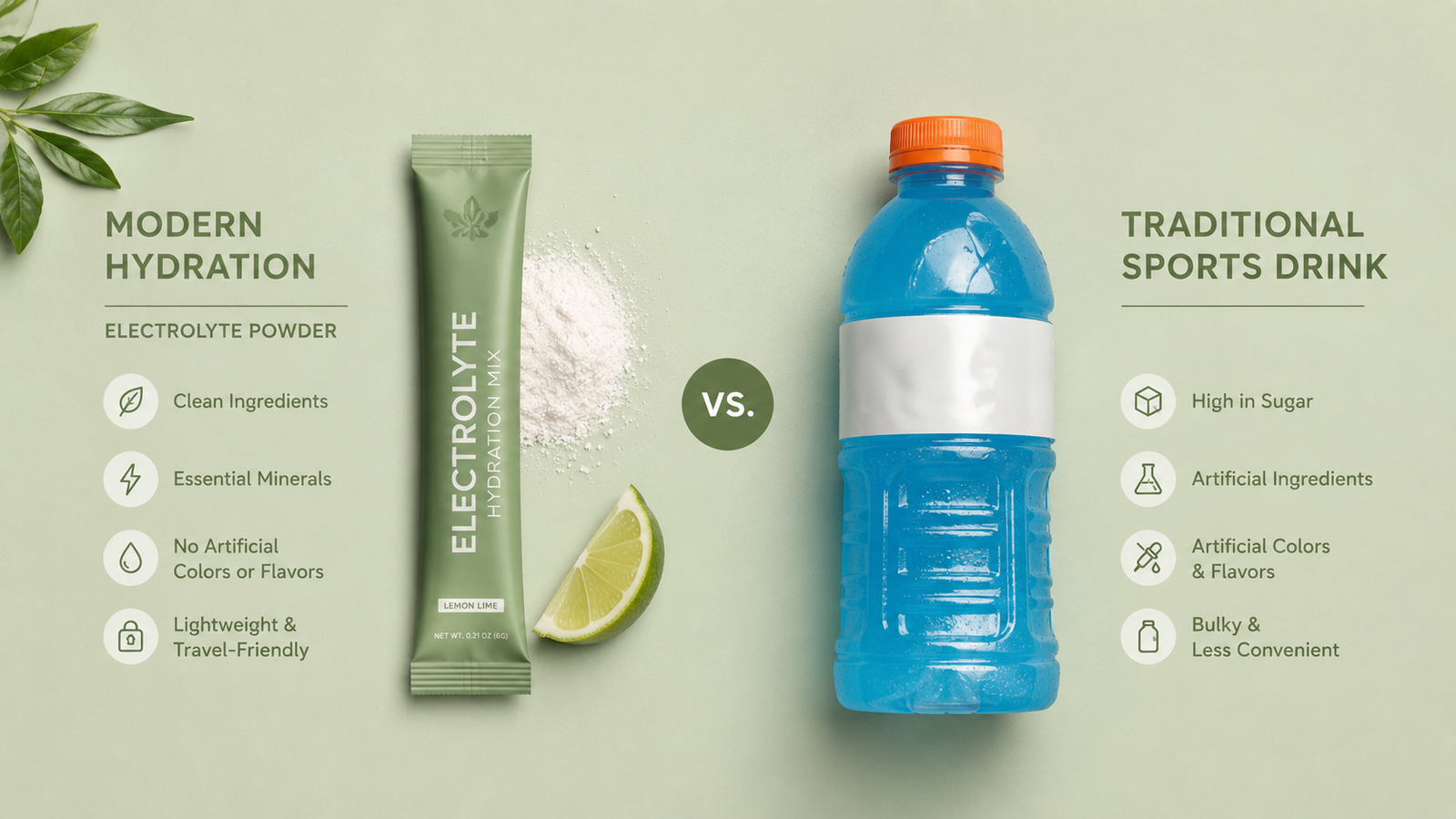
It is worth separating electrolyte drink mixes from the sports drinks most people grew up with, since they are often lumped together but built for different purposes. Traditional sports drinks like the classic yellow and blue bottles were formulated primarily around sugar and carbohydrates to fuel long endurance events, with electrolytes added mostly as a secondary feature. Many contain 20 to 34 grams of sugar per serving, which is a meaningful amount if you are drinking one just to feel more hydrated during a normal day.
Modern electrolyte drink mixes flip that priority. The mineral content is the main event, and sugar, when present at all, is usually a small, deliberate amount meant to aid absorption rather than provide fuel. For anyone doing genuinely long endurance activity, some carbohydrate content is actually useful. For everyday hydration, heat exposure, or travel, the lower-sugar, mineral-forward approach tends to be the better fit.
How to Actually Use One
If you have decided an electrolyte drink mix fits your situation, timing matters more than most people assume. For exercise, sipping it during the activity rather than only afterward helps prevent the dip in performance that comes from electrolyte loss mid-session. For heat exposure or travel, spreading intake across the day works better than one large dose, since your body can only absorb and use so much sodium and potassium at once.
A reasonable starting point for most healthy adults is one serving on days that actually call for it, rather than building it into every single day regardless of activity level. Paying attention to how you feel, fewer afternoon headaches, less post-workout fatigue, better focus in heat, is a more useful signal than any specific number on the label.
Do You Need One Every Day?
For most people with a moderate activity level and a reasonably varied diet, the honest answer is: probably not every day. Reaching for one after intense exercise, in hot weather, while traveling, or when you are sick and losing fluids makes real physiological sense. Treating it as a daily ritual regardless of activity level is more about habit and marketing than necessity, even if it is not harmful for most healthy people in moderate amounts.
If you already track other supplements like magnesium in your routine, it is worth checking your electrolyte mix’s label so you are not unintentionally doubling up.
This article is for educational and informational purposes only and does not constitute medical advice. People with kidney disease, high blood pressure, or other conditions affecting sodium and potassium balance should consult a doctor before regularly using electrolyte supplements. Always follow product labeling and consult a healthcare provider with questions about your individual needs.
nnCheck sodium, potassium, sugar and serving size against your actual hydration needs.
View Liquid I.V. Lemon Lime on Amazon →As an Amazon Associate, VitalHarmonyFit may earn from qualifying purchases.
Pingback: Sea Moss Electrolytes: Smart Hydration or Just Marketing?