If stairs feel harder, groceries seem heavier, your workouts are not translating into the same strength, or you are simply worried about staying independent as you age, it is reasonable to wonder whether muscle loss is part of the picture. Age-related muscle change is real, but it has multiple causes and it is not something a supplement can explain or solve by itself.
Start with the problem: are you noticing weakness, lower activity, reduced appetite, weight loss, slower recovery, or just trying to protect muscle before a problem becomes obvious? Those are different situations and deserve different answers.
Muscle loss after 50: what’s actually happening
Sarcopenia is the age-related loss of muscle mass, strength and physical function. Risk increases with age, but the pace varies widely from person to person and is influenced by activity level, illness, nutrition, hormones, body weight and other factors.
This matters because lower muscle strength and function are associated with falls, mobility problems and loss of independence. If weakness is new, pronounced or accompanied by unexplained weight loss, fatigue or other symptoms, it is worth discussing with a healthcare professional rather than assuming age is the only cause.
Why it happens

Several things can contribute at once: less resistance exercise, lower calorie or protein intake, illness, medications, hormonal changes and a reduced muscle-building response to protein and exercise. That is why the first step is not choosing a supplement; it is understanding which parts of the picture apply to you.
Resistance training and adequate nutrition are two of the most useful levers people can work on. Protein-rich foods provide the essential amino acids needed to maintain and rebuild tissue, while strength training gives the muscle a reason to adapt.
The good news: muscle still responds
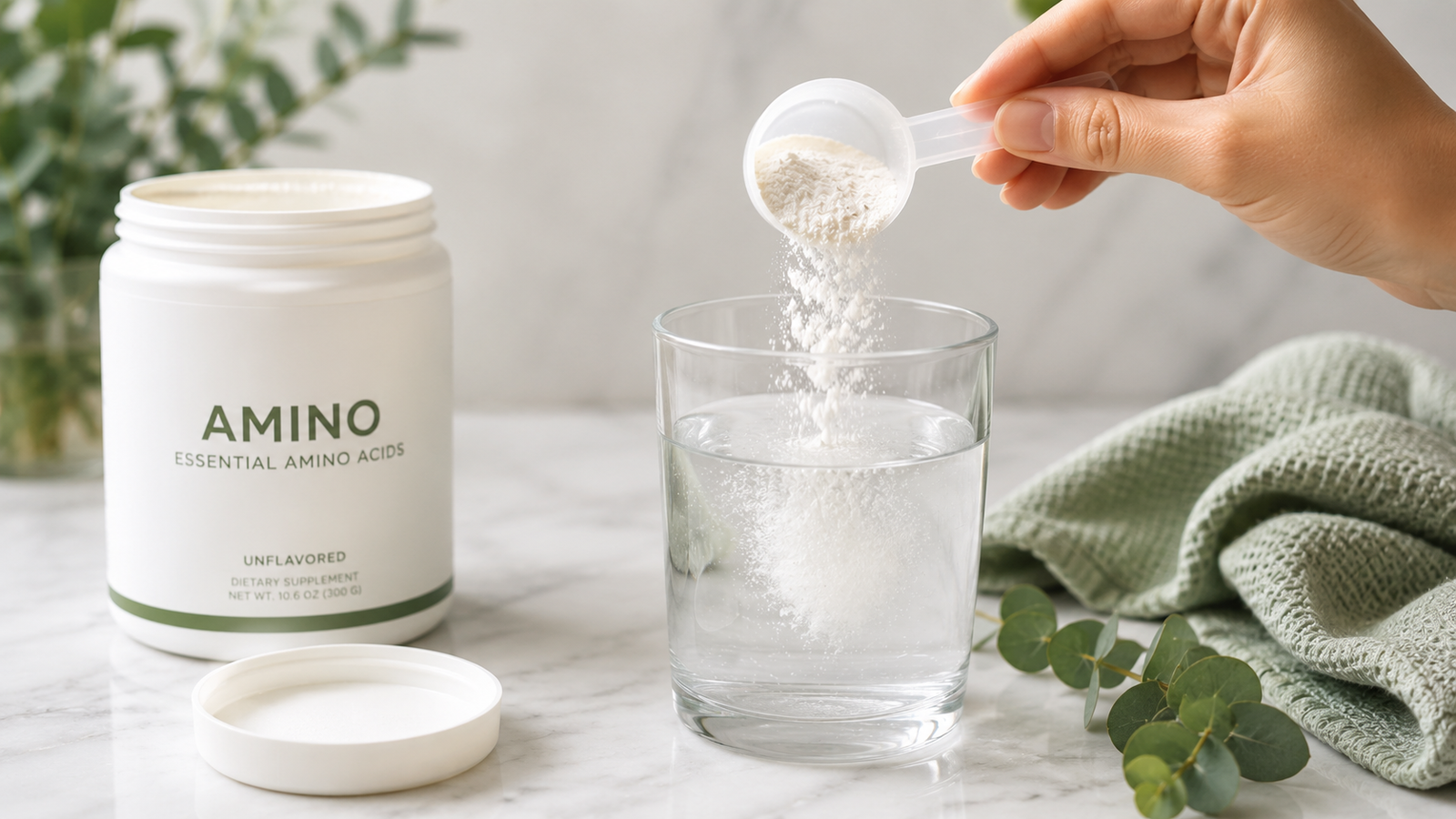
Older muscle can still respond to resistance exercise and essential amino acids. Research supports focusing on adequate high-quality protein across the day and regular strength training. Supplemental essential amino acids may be useful in some situations, particularly when appetite, meal size or protein intake is limited, but they are not automatically necessary for everyone over 50.
What actually helps

Adequate total protein intake
This is the foundation everything else builds on. Older adults generally need more dietary protein than younger adults to maintain the same muscle mass — not less, which runs counter to how a lot of people unconsciously eat as they age.
Essential amino acids, not just protein in general
Food can provide all of the essential amino acids needed for muscle protein synthesis. If you are comparing supplements, it helps to understand the EAA vs BCAA distinction and to check whether the formula is complete rather than assuming any amino acid powder is equivalent to a protein-rich diet.
Resistance exercise
Nutrition alone is not the whole picture. Resistance exercise is one of the strongest tools for maintaining strength and function with age. Protein and essential amino acids provide raw material; training provides the stimulus.
Consistency over intensity
This isn’t about one dramatic intervention. The research pattern here favors steady, sustained habits — consistent protein intake, consistent amino acid support, consistent movement — over occasional bursts of effort.
Muscle loss after 50: the bottom line
Muscle loss with age is real, but the practical response is broader than buying a supplement: keep resistance training in the picture, eat enough total calories and protein, address medical or appetite issues when needed, and use supplements only when they solve a specific gap.
FAQ
At what age should I start paying attention to this?
Given that measurable muscle loss can begin as early as the late 20s and accelerates notably after 50, it’s reasonable to start being intentional about protein and amino acid intake well before symptoms are noticeable.
Can strength and function improve after muscle loss starts? Often, yes. Resistance training, adequate nutrition and treatment of underlying health issues can improve strength and function, but the response varies and clinically significant sarcopenia deserves professional guidance.
Do I need a supplement, or can diet alone cover this?
A well-planned, protein-sufficient diet can cover it for many people. A complete essential amino acid supplement becomes more useful when dietary intake consistently falls short, appetite naturally declines with age, or convenience is a genuine barrier to eating enough protein-rich food throughout the day.
This article is for informational purposes only and is not medical advice. If you are comparing amino acid products after reviewing diet, training and your own needs, our Advanced Amino buying guide walks through one specific option and the label details to check before deciding.