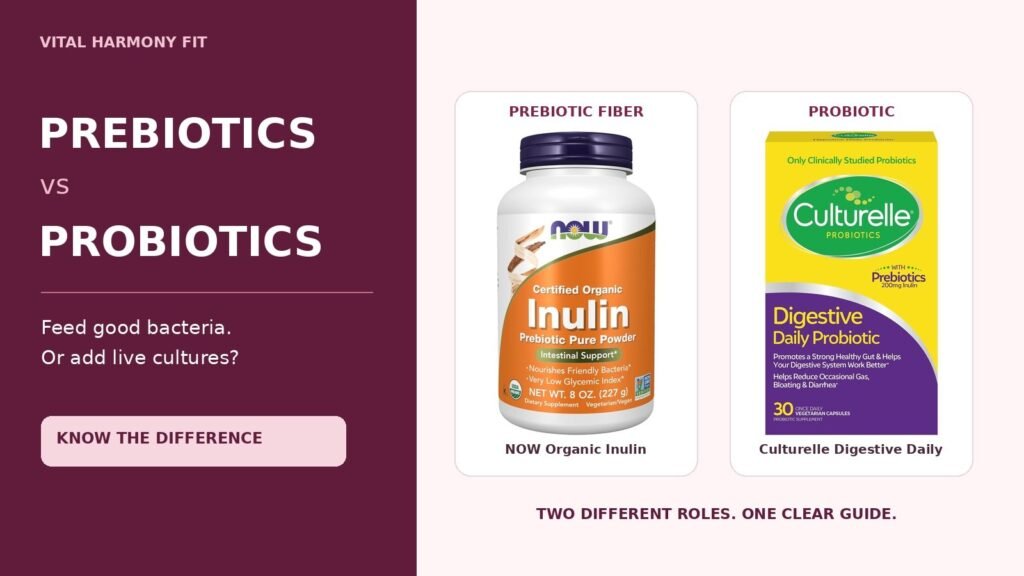
Quick Answer: Probiotics add selected live microorganisms, while prebiotics are substrates—often specific fibers—that beneficial gut microbes can use. One is not automatically better than the other. Your diet, symptoms, medical history, and the specific strain or fiber matter more than the word on the front of the package.
Prebiotics vs Probiotics: The Simple Difference
Think of probiotics as selected microorganisms and prebiotics as some of the food those microorganisms can use. Fermented foods and probiotic supplements may provide live microbes, while foods rich in certain fibers and resistant starches help support the existing gut ecosystem.
Why Prebiotic Fiber Is Getting More Attention
Gut-health products are becoming more specific. Instead of simply advertising “more bacteria,” newer products increasingly focus on particular fibers and substrates designed to interact with the microbiome. That is useful scientifically—but it also means shoppers need to look past buzzwords and ask what ingredient, dose, and evidence actually support a product.
Common Prebiotic Options
- Inulin and FOS: widely used prebiotic fibers, but they can cause gas or bloating in some people.
- PHGG: partially hydrolyzed guar gum is a soluble fiber used in several gut-health products.
- Psyllium: primarily known as a soluble, gel-forming fiber; it behaves differently from classic fermentable prebiotics.
- Food first: beans, oats, vegetables, fruit, whole grains, nuts and seeds can provide a mixture of fibers rather than a single isolated ingredient.
Do You Need a Probiotic Supplement?
Not necessarily. Probiotic effects are strain-specific, so a product containing many strains or billions of CFUs is not automatically superior. For many healthy adults, improving dietary variety and fiber intake may be a more sensible first step. A probiotic can make sense in specific situations, but the evidence should match the strain and intended use.
Why Fiber Can Make You Feel Worse at First
Increasing fermentable fiber too quickly can lead to gas, fullness or bloating. Gradual increases and adequate fluid intake are usually more comfortable. People with persistent abdominal pain, significant bowel changes, unexplained weight loss, blood in the stool, or other concerning symptoms should seek medical advice rather than treating the problem with supplements alone.
Prebiotic, Probiotic or Synbiotic?
A synbiotic combines live microorganisms with a substrate intended to be used by microorganisms. The label sounds attractive, but the important question remains whether the specific combination has evidence behind it. More ingredients do not automatically mean better gut health.
A Smarter Gut-Health Checklist
- Start with dietary fiber variety when appropriate.
- Increase fiber gradually rather than dramatically overnight.
- Check the exact probiotic strain—not just the CFU number.
- Compare serving size and dose instead of marketing claims.
- Be cautious with products promising to “detox,” cure digestive disease, or permanently reset the microbiome.
Bottom Line
Probiotics can be useful tools, but they are only one part of gut health. Prebiotic fibers and an overall fiber-rich eating pattern help provide substrates for the microbes already living in the gut. The best choice is not automatically the newest product—it is the approach that fits your needs and has credible evidence behind it.
This article is for educational purposes and is not medical advice. If you have persistent digestive symptoms or a medical condition, discuss supplements and major dietary changes with a qualified healthcare professional.