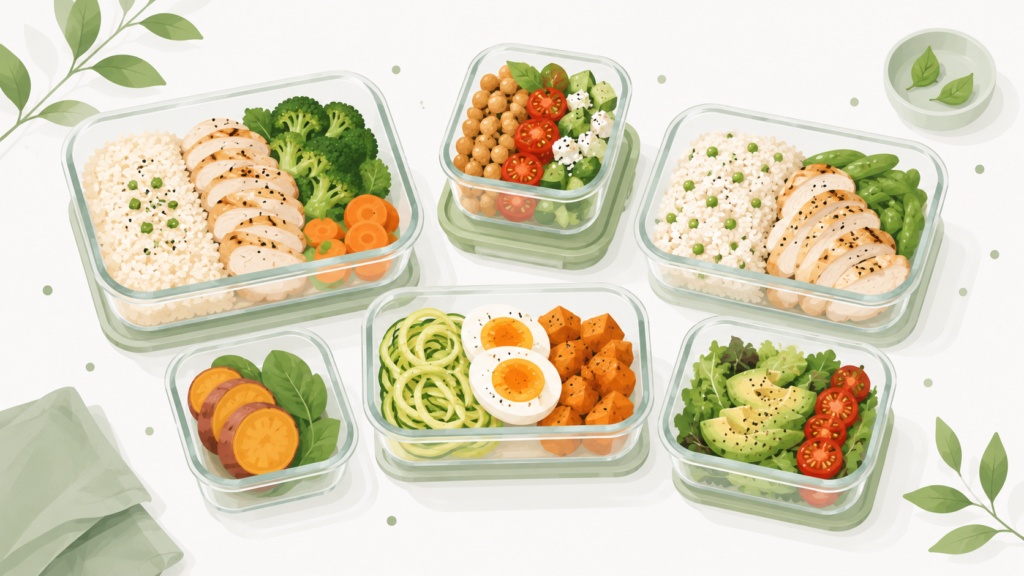

One of the biggest obstacles to eating healthy consistently is time. Meal prep for beginners solves exactly this problem: between work, family, and daily responsibilities, finding the energy to cook a nutritious meal from scratch every day can feel overwhelming. This is exactly where planning ahead changes everything.
Preparing food in advance — short for meal preparation — is the practice of planning and preparing some or all of your meals for the week. It’s one of the most practical habits you can build for saving time and eating better. If you are also looking to optimize your health, understanding vitamins and supplements for beginners can complement your new nutrition routine.
Why Planning Your Meals Actually Works
This strategy works because it removes the two biggest barriers to healthy eating: time and decision fatigue. When you have pre-prepared meals, you ensure the healthy choice is the easy choice. For those focused on fitness, our guide on strength training after 35 shows how nutrition fuels performance.
Decision fatigue is a real psychological phenomenon. By the time 6 PM rolls around, your ability to make good choices is depleted. Having a container ready in the fridge bypasses the need for willpower. This is a core reason why meal prep for beginners is so effective for long-term weight management and health goals.
Types of Preparation Styles: Find Your Fit
There’s no single right way to start. Whether you choose full batch cooking or component prep, the goal is flexibility. Many people find that preparing individual ingredients helps them stay consistent without getting bored of the same flavors.
- Full Meal Prep: Portioned meals ready to grab and go.
- Component Prep: Cooking grains, proteins, and veggies separately to mix and match.
- Batch Cooking: Making large pots of soup or stew to freeze for later.

Step-by-Step: How to Master Meal Prep for Beginners
Following a structured approach to meal prep for beginners makes the process stress-free. From planning your week to efficient cooking, it is a skill that improves over time. Don’t forget that recovery is just as important as diet; check out the best sleep gadgets and tools to round out your wellness plan.
1. Start with a Clean Kitchen
It sounds simple, but starting with an empty dishwasher and clear counters reduces stress. You need space to chop, roast, and portion your food efficiently.
2. Shop with a List
Never go to the grocery store without a plan. Stick to the perimeter of the store where the fresh produce and proteins are located. This keeps your meal prep for beginners focused on whole foods rather than processed shortcuts.
3. Multi-Task Your Cooking
Use your oven and stovetop simultaneously. While your quinoa is simmering, roast two sheet pans of vegetables. This “active time” management is how you finish a week’s worth of food in under two hours.
4. Invest in Quality Containers
Glass containers are generally better than plastic as they don’t leach chemicals and can be moved directly from the fridge to the microwave or oven. Having a matching set also makes your fridge look organized, which provides a psychological boost.
5. Don’t Overcomplicate Recipes
For your first few weeks, stick to simple seasonings like salt, pepper, garlic, and lemon. You can add variety later with different sauces. The goal of meal prep for beginners is consistency, not culinary perfection.
In conclusion, meal prep for beginners is a powerful tool for anyone looking to reclaim their time and health. By starting small and focusing on the process, you’ll soon find it’s an indispensable part of your lifestyle. The time you invest on a Sunday pays dividends in energy and focus all week long.