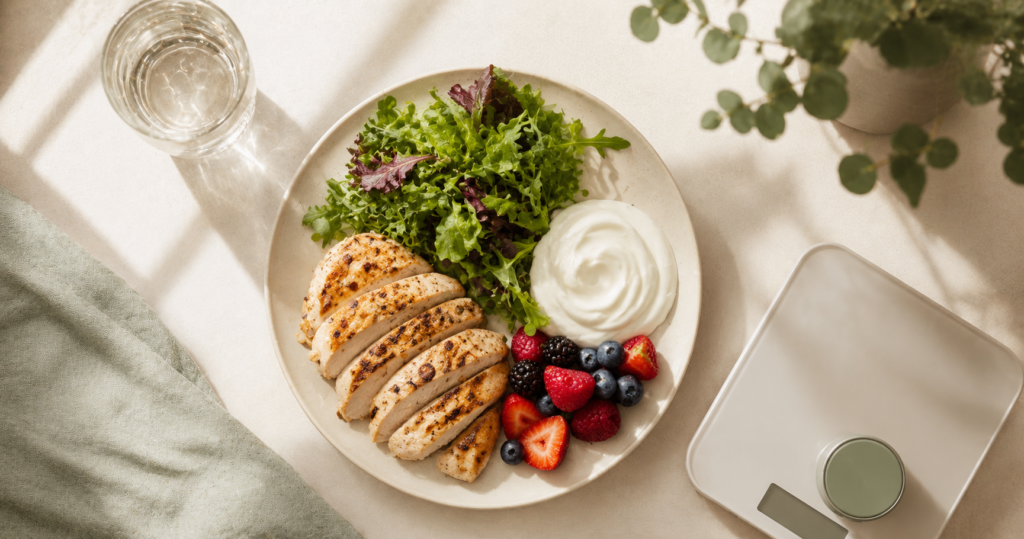
If you’re wondering what to eat on GLP-1 medication, you’re not alone. GLP-1 medications — the category that includes semaglutide (Ozempic, Wegovy) and tirzepatide (Mounjaro, Zepbound) — have become one of the most talked-about health topics in the U.S…
These medications work by dramatically reducing appetite, which is exactly the point — but it creates a new problem. When you’re eating a fraction of what you used to, it becomes much harder to get oganize what to eat on GLP-1 medication to ensure enough protein, fiber, and essential micronutrients. Without a plan, this can lead to muscle loss, fatigue, and nutrient gaps if your diet isn’t adjusted intentionally.
This isn’t medical advice on the medication itself — that conversation belongs with your prescribing doctor. But here’s what the nutrition science says about supporting your body while your appetite is suppressed.
Essential Nutrition: What to Eat on GLP-1 Medication
The #1 Priority: Protecting Your Muscle Mass
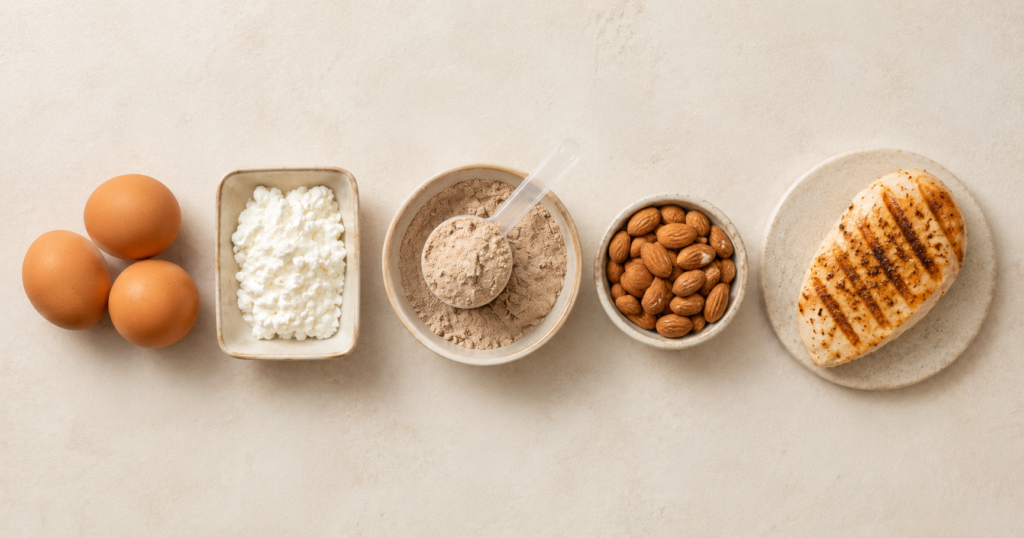
Rapid weight loss from any source — including GLP-1 medications — doesn’t just burn fat. Knowing what to eat on GLP-1 medication is crucial because without enough protein and resistance training, a significant portion of that weight loss can come from lean muscle, which is the opposite of what most people actually want. Less muscle also means a slower metabolism over time.
What tends to help:
- Prioritizing protein at every meal, even small ones — aim to hit protein before filling up on anything else
- Clinical nutrition guidance often points toward roughly 1.2–2.0 grams of protein per kilogram of body weight daily for people on GLP-1 medications, though individual needs vary
- Since appetite is limited, many people find it easier to hit that number with efficient sources: eggs, Greek yogurt, cottage cheese, lean meats, and protein powders
- Pairing meals with light resistance training (even bodyweight exercises) to help preserve muscle during the weight loss
Fiber: The Nutrient Most People Forget
Ironically, one of the most common side effects of GLP-1 medications — constipation and digestive discomfort — is often made worse by low food intake. When considering what to eat on GLP-1 medication, fiber must be a top priority to maintain regularity.
What tends to help:
- Choosing fiber-dense foods over empty calories when appetite is limited: berries, chia seeds, oats, leafy greens
- Staying consistently hydrated, since fiber without enough water can worsen constipation, not fix it
- Some people use a fiber supplement (like psyllium husk) to close the gap when whole food intake is very low
The Micronutrient Gaps to Watch
When someone goes from eating three full meals to a few small ones, certain vitamins and minerals are the first to fall short — even if calories are still “enough” on paper. Deciding what to eat on GLP-1 medication should include a focus on nutrient density.
The nutrients most commonly discussed in this context include:
- Vitamin B12 — important for energy and nerve function, and often lower in people eating less overall
- Vitamin D — commonly low in the general population, and even more so with reduced food variety
- Iron — especially relevant for those eating less red meat or animal protein
- Magnesium — supports muscle function, sleep, and energy, and is easy to under-consume on a reduced-calorie intake
- Electrolytes (sodium, potassium) — worth paying attention to if nausea or reduced fluid intake is an issue
A daily multivitamin is often suggested as a simple baseline, but it shouldn’t be treated as a replacement for actual food — think of it as filling the cracks, not the whole floor.
Probiotics and Gut Support
Digestive side effects (nausea, bloating, irregularity) are among the most commonly reported issues with GLP-1 medications. Some people find that a probiotic, alongside slower eating and smaller, more frequent meals, makes a noticeable difference in comfort — though individual response varies quite a bit here.
A Simple Daily Framework
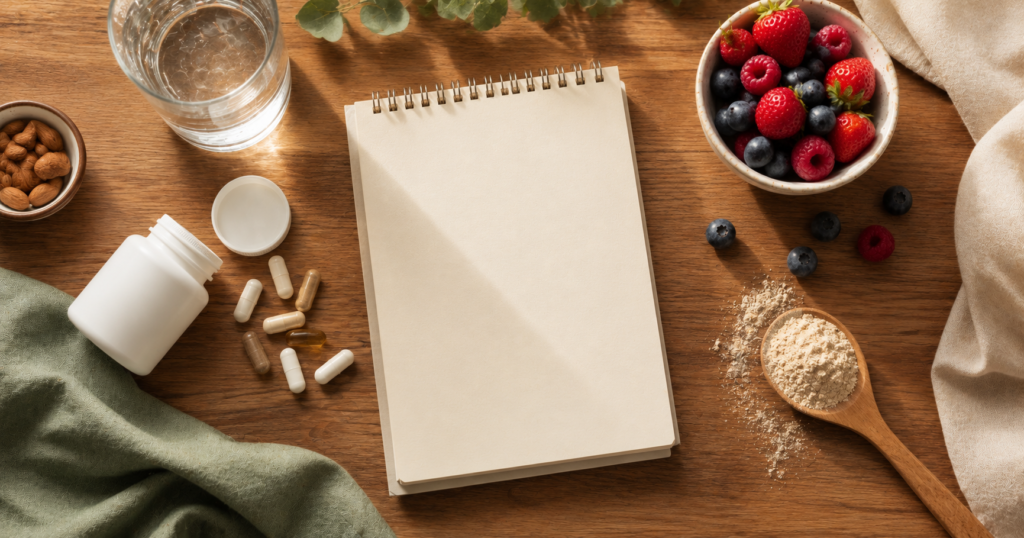
If your appetite is limited, structure beats willpower. A framework some people find useful for what to eat on GLP-1 medication:
- First bite of every meal = protein. Not because carbs are “bad,” but because protein is the easiest thing to under-eat when you’re full quickly.
- One fiber source per meal, even a small one.
- Water before food, not with it — nausea is often worse on an empty, dehydrated stomach.
- A basic multivitamin as a daily safety net.
- Movement, not just cardio — a couple of short resistance sessions a week to protect muscle.
The Bottom Line
GLP-1 medications are a tool, not a full nutrition plan on their own. The people who tend to feel best on them — and keep the results long-term — are the ones who treat the reduced appetite as an opportunity to eat more intentionally, not just less. Protein, fiber, and a handful of key micronutrients are doing a lot of the heavy lifting behind the scenes.
This article is for informational purposes only and does not constitute medical advice. If you are taking GLP-1 medication, work with your doctor or a registered dietitian to build a nutrition plan suited to your specific needs.
This article is for informational purposes only and is not a substitute for professional medical advice. Consult your doctor before starting any new supplement.